
You open the fridge door and everything inside is warm. Whether you searched for GE refrigerator not cooling, GE fridge not cold enough, or GE fridge stopped cooling entirely, the light comes on, the freezer may still be working, but the refrigerator compartment is not holding temperature and the food is at risk. GE refrigerators span several platform generations, and two of the most common causes, a blocked condenser coil and a failed adaptive defrost system, account for the majority of no-cooling calls we handle in HRM.
- Dirty condenser coils (most common, free to fix)
- Defrost timer stuck (older GE models without a control board)
- Condenser fan not running (coils clean but compressor overheating)
- Failed start relay (compressor not starting)
- Evaporator fan not running (freezer cold, fridge warm)
- Adaptive defrost system failure (frost build-up blocking airflow)
- Failed compressor or refrigerant leak (last resort, requires a technician)
This guide covers GE top-freezer, bottom-freezer, French Door, and GE Profile refrigerators. If your GE Profile not cooling search brought you here, or you are dealing with a GE Profile fridge not cooling, a GE French Door not cooling, or a GE French Door refrigerator not cooling, the causes and diagnostic steps are the same as covered here. Where steps differ between configurations, that is noted clearly inside each cause.
Mapleland Appliance is a locally owned appliance repair company in Halifax, NS. We write these guides from real repair experience to help you diagnose the problem yourself, and we are available for same-day service across HRM when you need a hand.
✓ I want to try fixing it myself
Read on. This guide walks you through all 7 causes in order of difficulty, easiest first, with step-by-step instructions and the tools you need.
📞 I’d rather have a technician handle it
No problem. We service GE refrigerators across Halifax and HRM. Same-day appointments available. $89.9 flat diagnostic fee.
Safety notice: These guides are for informational purposes only. Appliance repair involves electrical hazards. Always unplug the refrigerator before accessing internal components. If you are unsure about any step, stop and call a technician. Mapleland Appliance is not liable for injury or damage resulting from DIY repair attempts.
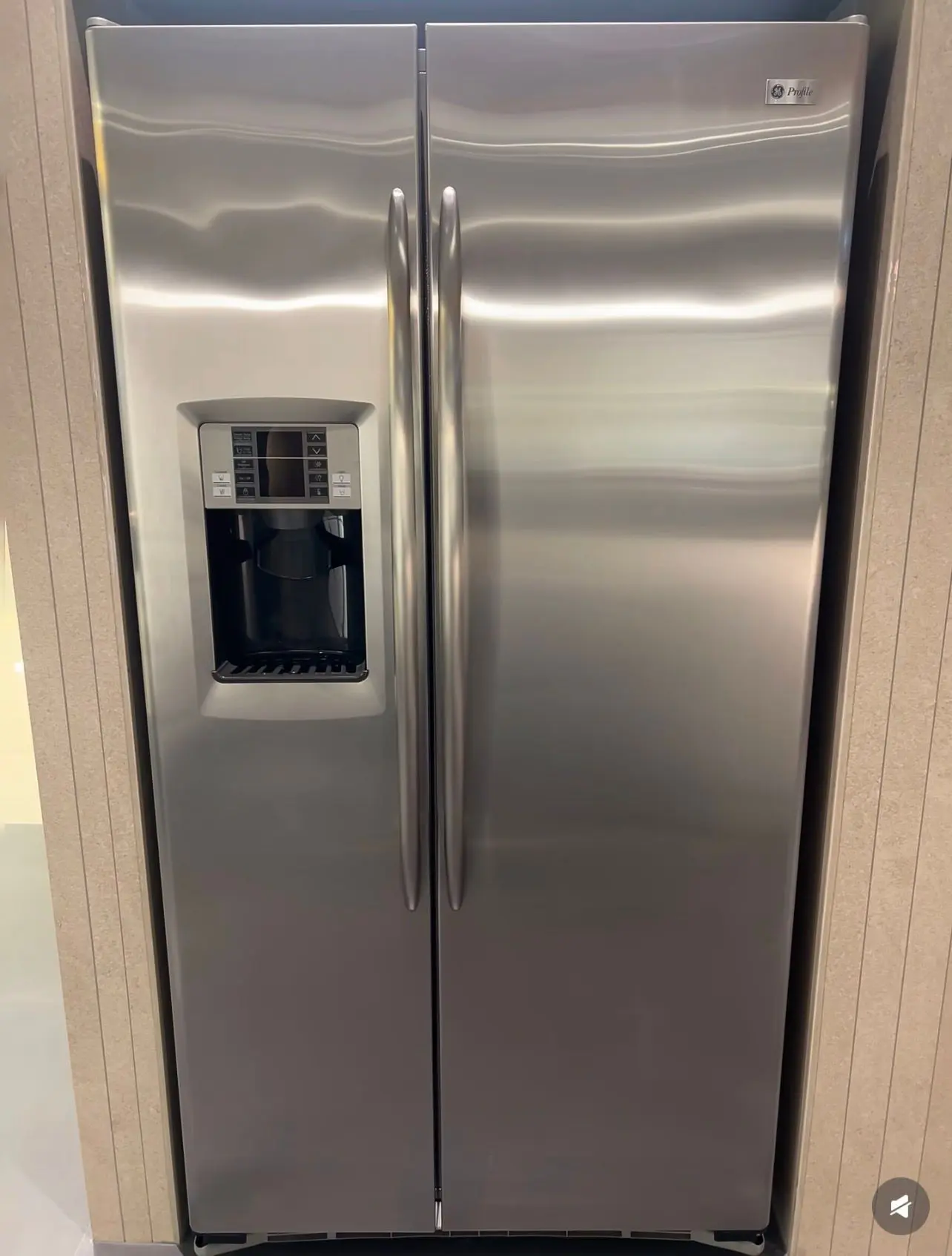
7 Most Common Causes of a GE Fridge Not Cooling
| Component | DIY Difficulty | Est. Cost (CAD) |
|---|---|---|
| Dirty Condenser Coils | ⭐ Easy | $0, DIY clean |
| Defrost Timer Stuck (older models) | ⭐ Easy | Part $15–$40, total $100–$160 with labour |
| Condenser Fan Not Running | ⭐⭐ Medium | Part $30–$60, total $120–$180 with labour |
| Failed Start Relay | ⭐⭐ Medium | Part $10–$30, total $100–$160 with labour |
| Evaporator Fan Not Running | ⭐⭐ Medium | Part $30–$70, total $120–$190 with labour |
| Adaptive Defrost System Failure | ⭐⭐⭐ Hard | Part $20–$80, total $120–$220 with labour |
| Failed Compressor or Refrigerant Leak | ⭐⭐⭐ Professional only | From $350 total; replacement often more cost-effective |
* Prices shown are estimates only. Actual costs may vary depending on your model and parts availability. Call us for a quote before you decide.
Dirty Condenser Coils
What it is: The condenser coils release heat from the refrigerant into the surrounding air. On most GE refrigerators, including GE Profile and French Door models, the condenser coils are located at the back of the machine near the bottom. When these coils become coated in dust, pet hair, and debris, they cannot release heat efficiently. The compressor runs harder and longer to compensate, eventually overheating and shutting off, leaving the fridge warm.
In Halifax, this problem builds faster than the manufacturer’s maintenance schedule assumes. The combination of coastal salt air, high humidity, and the fine lint that circulates through older apartment buildings means coils accumulate fouling in half the time you might expect inland. The Canada Safety Council recommends regular maintenance of household appliances, including condenser coil cleaning, as part of routine home safety practice. We recommend cleaning GE fridge condenser coils every six months in Halifax, rather than the annual schedule most manuals suggest.
Symptoms:
- Fridge gradually getting warmer over several weeks
- Compressor running almost continuously with little or no cooling effect
- Back or bottom of the fridge noticeably hot to the touch
- Fridge performs better in winter and worse in summer
- Unplug the refrigerator.
- Pull the fridge away from the wall to access the back. On most GE models, the condenser coils are a grid of dark tubing running across the lower back panel of the machine.
- Use a condenser coil brush to loosen debris from between the coil rows. Work top to bottom so loose debris falls to the floor rather than back into the coils.
- Follow with a vacuum set to low suction to remove the loosened material. Do not use high suction directly against the coil fins, as this can bend them.
- Wipe the surrounding area and the condenser fan blade if accessible.
- Push the fridge back into position, plug in, and allow two to three hours before checking whether cooling has recovered. A fully warmed fridge takes time to return to operating temperature even after the root cause is resolved.
Defrost Timer Stuck (Older GE Models)
What it is: Older GE refrigerators, typically those made before the mid-2000s, use a mechanical defrost timer rather than an electronic control board to manage defrost cycles. This timer rotates slowly and switches the machine between cooling mode and defrost mode on a fixed schedule. When the timer sticks or fails, it can get stuck in defrost mode and stay there. In defrost mode, the compressor is off and the defrost heater runs instead. The fridge and freezer both warm up, and the machine stays silent for an unusually long time.
The classic sign of a stuck defrost timer is a refrigerator that is completely silent and warm throughout, and then suddenly comes back to life and cools normally after you manually advance the timer dial with a screwdriver. If turning the timer knob a small amount causes the compressor to start and the machine to begin cooling again, the timer was stuck in the defrost position and needs to be replaced.
Symptoms:
- Fridge and freezer both warm, compressor completely silent for an unusually long period
- Machine suddenly resumes normal operation on its own after a long silent period
- Advancing the timer dial slightly with a screwdriver causes the compressor to start immediately
- Older GE model without a digital display or electronic control panel
- Locate the defrost timer behind the temperature control housing inside the fridge, or behind the front kick plate.
- With the fridge plugged in, use a flat-head screwdriver to slowly turn the timer dial clockwise until you hear or feel a click.
- Wait five minutes. If the compressor starts and the fridge begins cooling, the timer was stuck in defrost mode.
- To replace: unplug the fridge, remove the timer housing screws, disconnect the wiring harness connectors (photograph the connector positions before removing), and install the new timer in the same orientation.
- Reconnect the wiring, reinstall the housing, plug in, and confirm the compressor cycles normally over the next few hours.
Condenser Fan Not Running
What it is: The condenser fan draws air across the condenser coils to carry heat away from the refrigerant. Without it, even clean coils cannot dissipate heat, and the compressor overheats and shuts down on its thermal protection. On GE refrigerators, the condenser fan is located near the compressor at the back of the machine, typically behind the lower rear access panel. The fan runs whenever the compressor runs. If the compressor is running but the fan is not, the machine will get warm within a short time.
Symptoms:
- Coils are clean but the fridge is still warm
- Compressor starts but fridge does not cool
- Back of the fridge is very hot near the compressor
- Fan is silent when the compressor is running
This video demonstrates how to test and replace the condenser fan on a GE refrigerator:
Failed Start Relay
What it is: The GE fridge start relay is a small component that plugs into the side of the compressor and provides the initial electrical surge the compressor motor needs to start running. When it fails, the compressor cannot start. The fridge is silent, or you may hear a brief click or hum every few minutes as the compressor attempts to start and fails. Without the compressor running, there is no refrigerant circulation and no cooling in either compartment.
On GE refrigerators, the start relay is accessed by removing the lower rear access panel. It plugs directly into the compressor housing on the side. The relay can be tested without a multimeter by removing it and shaking it: a rattling sound from inside the relay body indicates the internal component has broken and the relay needs to be replaced.
Symptoms:
- Fridge and freezer both warm, no compressor sound
- Brief clicking or humming from the compressor area every few minutes, then silence
- Rattling sound when the start relay is removed and shaken
- Defrost system is functioning and fans run, but compressor never starts
- Unplug the refrigerator and pull it away from the wall.
- Remove the lower rear access panel, usually held by two to four screws.
- Locate the compressor, a black dome-shaped component at the bottom. The start relay is a small rectangular or cylindrical component plugged into the side of the compressor.
- Use a flat-head screwdriver to gently pry off the cover plate over the relay if present, then pull the relay straight off the terminal pins with firm, even pressure.
- Shake the relay and listen for a rattle. A rattle means replace it.
- For a definitive test, set a multimeter to continuity mode and test across the relay terminals. No continuity confirms failure.
- Install the new relay, pressing it firmly onto the terminal pins until it seats. Reinstall the access panel, plug in, and confirm the compressor starts and runs steadily.
Evaporator Fan Not Running
What it is: The GE fridge evaporator fan circulates cold air from the evaporator coils into the refrigerator and freezer compartments. If this fan stops, the evaporator coils continue to get cold but the cold air does not move into the fridge. The result is a fridge that is warm while the freezer may still feel cool near the coils themselves. On standard GE top-freezer models, the evaporator fan is located inside the freezer compartment behind a rear panel. On GE French Door models, the configuration is different and there are two fans to consider.
If your GE French Door refrigerator is not cooling in the upper section, this is the first place to look. GE French Door models have two evaporator fans: the main evaporator fan inside the lower freezer drawer, and a separate fresh food evaporator fan inside the upper fridge section. If only the fresh food evaporator fan fails, the freezer will remain cold while the upper refrigerator section loses cooling entirely. The access location and disassembly method for both fans varies by model number; if you are working on a French Door unit, check your model’s service documentation before attempting removal.
Symptoms:
- Freezer is still cool but fridge compartment is warm
- French Door fridge: upper fridge section warm, lower freezer fine (fresh food evap fan)
- No airflow felt coming from the vents inside the fridge when compressor is running
- Unusual silence from inside the freezer section during a cooling cycle
This video covers GE refrigerator evaporator fan diagnosis and replacement:
Adaptive Defrost System Failure
What it is: GE refrigerators use an adaptive defrost system that monitors usage patterns and adjusts how often the defrost heater runs to melt frost off the evaporator coils. When this system fails, frost builds up on the evaporator coils until it forms a solid ice block. That ice block prevents airflow from reaching the evaporator, so even though the refrigerant circuit is working and the compressor is running normally, no cold air can circulate. The fridge gets warm. The freezer may also lose cooling as the ice grows.
The adaptive defrost system involves several components: a defrost heater that melts the frost, a defrost thermostat that cuts the heater off once the coils reach a safe temperature, a thermistor that monitors coil temperature and reports to the control board, and the control board itself that decides when to run a defrost cycle. Any one of these components can fail and produce the same result: frost accumulation that blocks airflow. Diagnosing which specific component has failed requires testing each one individually with a multimeter and accessing the evaporator coils behind the freezer rear panel. This is a technical repair, not a DIY job for most homeowners.
Symptoms:
- Fridge warm and freezer losing cooling, but compressor sounds like it is running
- Visible frost or ice build-up on the back wall of the freezer compartment
- Evaporator fan is not audible because ice has physically blocked the fan blade
- Fridge temporarily cools better after a manual defrost (unplugging for 24 hours), then the problem returns within days or weeks
This video walks through GE refrigerator defrost system diagnosis, including how to test the heater, thermostat, and thermistor:
Failed Compressor or Refrigerant Leak
What it is: The GE fridge compressor is the heart of the refrigeration system. It compresses the refrigerant and drives it through the condenser and evaporator coils. A failed compressor produces no cooling regardless of what else is working. A refrigerant leak removes the working fluid from the system entirely, and without refrigerant there is nothing for the compressor to circulate. In both cases, the fridge and freezer will be at room temperature and the compressor will either be silent or will run continuously with no effect.
Refrigerant handling requires a certified technician. This is not a DIY repair under any circumstances. For most older GE refrigerators, a failed compressor or refrigerant leak is also the point where repair versus replacement becomes a serious conversation, because compressor replacement typically costs more than half the price of a comparable new fridge.
Symptoms:
- All other components (fans, defrost, relay) have been checked and are working
- Compressor is completely silent or runs continuously with zero cooling effect
- No temperature drop at all in either compartment after several hours
GE Refrigerator Error Codes and Cooling Faults
Error code displays vary significantly across GE refrigerator generations. GE Profile and newer GE French Door models with digital displays may show temperature alert codes. If your GE Profile is not cooling and displaying a fault code, or any GE fridge is showing an error on the display panel, call us with the code and your model number and we can advise over the phone before booking anything.
Should You Repair or Replace Your GE Fridge?
According to the Insurance Bureau of Canada, water damage from household appliances is one of the leading causes of home insurance claims across Atlantic Canada. A GE fridge that is not cold puts food at risk and, if a refrigerant line develops a leak, can create other problems. Addressing the fault promptly matters.
Rule 1: The 50% Rule. If the total repair cost (parts plus labour) exceeds 50% of the price of a comparable new GE refrigerator, replacement is usually the better long-term financial decision.
Rule 2: The Lifespan Rule. GE refrigerators typically last 14–17 years with regular maintenance. If your machine is under 8 years old, repair almost always makes sense. Over 12 years old with a compressor failure, replacement deserves serious consideration.
Rule 3: The Parts Availability Rule. For most GE refrigerator models, condenser fans, evaporator fans, defrost components, and start relays are readily available through local distributors including Midbec in Dartmouth. Compressor replacement is where parts cost and labour together can push the total repair cost past the replacement threshold.
At Mapleland Appliance, we assess the refrigerator, tell you exactly what has failed, give you a clear repair quote, and tell you honestly whether fixing or replacing makes more financial sense for your situation. Call us and we will give you a straight answer.
Frequently Asked Questions
How much does it cost to fix a GE fridge not cooling in Halifax?
It depends on the cause. Cleaning dirty condenser coils costs nothing and takes about 20 minutes. A start relay replacement runs $10–$30 in parts and is one of the more affordable repairs. A defrost timer on older models costs $15–$40 in parts. A condenser or evaporator fan replacement typically comes to $120–$190 total with labour. A defrost system repair, depending on which component has failed, generally ranges from $120–$220 total. Compressor failure is the most expensive scenario and may make replacement the more practical choice. At Mapleland Appliance, our diagnostic fee is $89.9 and we give you a clear quote before any work begins.
My GE fridge is making noise but not cooling. What does that mean?
It depends on which noise you are hearing. A compressor that starts, runs briefly, clicks, and stops repeatedly suggests a start relay issue or a compressor overheating due to dirty condenser coils or a seized condenser fan. A compressor that runs continuously without producing any cooling suggests a refrigerant leak or failed compressor. A humming or buzzing from inside the freezer with no airflow moving through the vents points to an evaporator fan fault. The location and pattern of the noise narrows down the cause significantly before any panels are opened.
My GE French Door fridge upper section is not cooling but the freezer is fine. What should I check?
On GE French Door refrigerators, the most likely cause when the upper fridge section is warm and the lower freezer is normal is the fresh food evaporator fan inside the upper compartment. This is a separate fan from the main evaporator fan in the freezer section, and it is responsible specifically for circulating cold air through the fridge compartment. When it fails, the freezer continues to function while the fridge loses cooling entirely. A blocked or iced-over air damper between the two compartments is another possibility. Both require accessing internal components; the exact disassembly method depends on your specific GE French Door model number.
How often should I clean the condenser coils on a GE fridge in Halifax?
Every six months, rather than the annual schedule most GE manuals suggest. Halifax’s coastal air carries salt and humidity that bond dust and debris to condenser coil surfaces faster than in drier inland cities. If you have pets, every four months is more realistic. The cleaning itself takes about 20 minutes with a condenser coil brush and a vacuum. Staying on top of this single maintenance task prevents the majority of GE fridge not cooling calls we handle across Halifax, Dartmouth, and Bedford.
GE Fridge Repair in Halifax, NS
If your GE refrigerator is not cooling and the repair is beyond a comfortable DIY fix, Mapleland Appliance is a locally owned appliance repair company serving Halifax and the surrounding HRM communities. We provide fridge repair in Halifax and across the region, with same-day and next-day appointments available.
We service GE refrigerators across Halifax, Dartmouth, Bedford, and surrounding areas. We carry common GE replacement components and complete most repairs in a single visit.
Mapleland Appliance
📞 (782) 409-2734
📍 Serving Halifax, Dartmouth, Bedford, Sackville, and Cole Harbour, NS
💰 $89.9 diagnostic fee, clear pricing with no hidden costs
🕐 Same-day and next-day appointments available
GE Fridge Not Cooling?
We diagnose the problem clearly, give you an upfront quote, and fix it fast. Or tell you honestly if it is not worth repairing.
Same-day and next-day appointments across Halifax and HRM.